
Description
Multifruit
Crops Overview
Linseed can be harvested using a combine with a standard grain header for seed production.
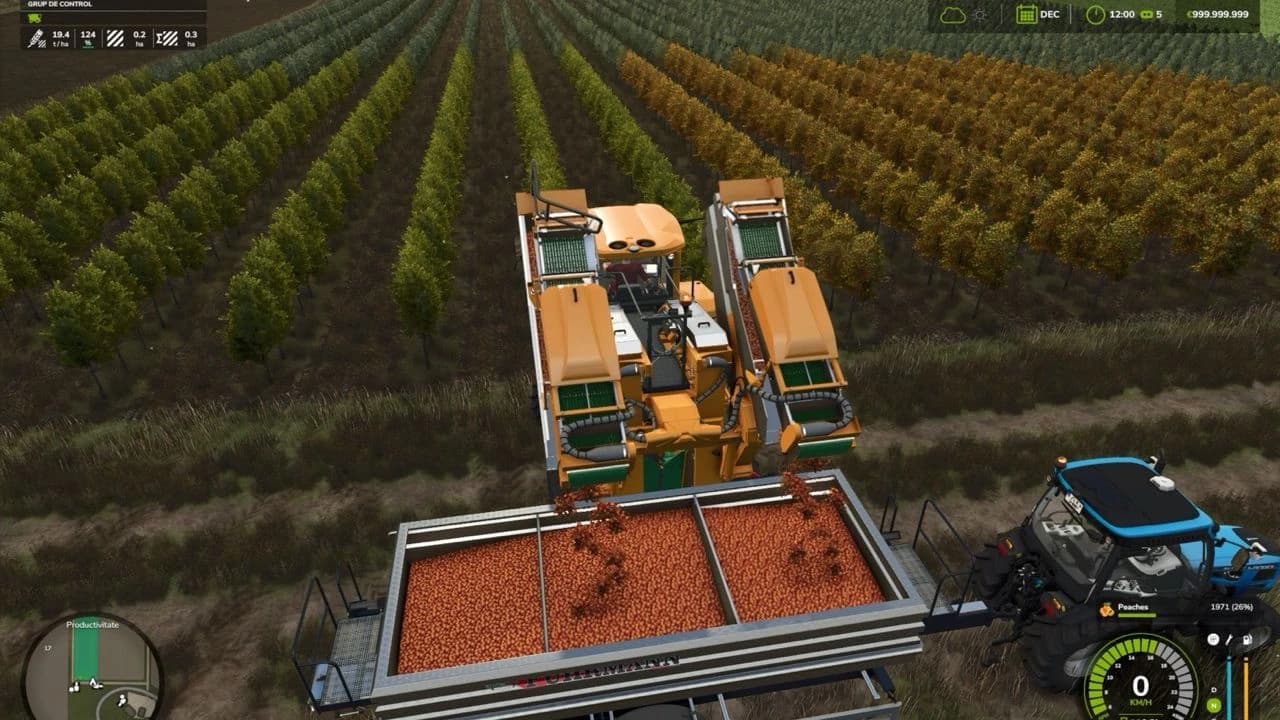
The new orchards have several harvesters modded: 2 New Holland (one for grapes and hops and the other for olives and fruits), one Oxbo and the Jacto K3500 (thanks to Wrobelmen)
Flax and hemp are harvested with a swather for fiber only. The fibers can currently be baled using a round baler (square balers will be supported later). These fibers can be processed into materials and rope at the spinnery.
Rye, Long Grain Rice, Buckwheat, Beans, standard Soybeans, Chickpeas, Lentils, and Dried Peas can be swathed for a 25% yield increase.
Alfalfa and Clover can also be swathed, but without a yield bonus — this simply offers an alternative mowing method. They can be dried into specific hays or fermented into specific silages.
All pulses produce a special straw type — pulse straw, which can be used in TMR recipes or fermented in a bunker to make compost.
Silphie is harvested with a forage harvester, producing chaff in quantities similar to corn. It regrows like grass after cutting.
Tobacco can be harvested using a spinach harvester, which handles both crops.
Lavender can be harvested with either a forage harvester or a cotton harvester. Using the forage harvester results in 20% lower yield, but it is cheaper and recommended for this crop.
Lavender and Peanuts are planted using a vegetable planter (similar to those used for carrots and parsnips) and should be planted in ridges for improved yield.
Peanuts can be harvested with the included peanut harvesters.
Corn now produces corn stalks as straw, which can be baled and used in TMR or fermented into compost in a bunker.
Miscanthus is a regrowing crop harvested with a forage harvester for miscanthus chaff. It can be:
Fed to sheep and horses
Used in TMR instead of straw
Added to chaff/alfalfa/clover bunkers to make additional silage
Placed in an empty bunker (as organic waste) to ferment into compost
Processed in the Paper Factory (alternative paper recipe)
Used in the Grain Crusher, alongside grains, to make mineral feed
Sugar beet cutters can also process beetroot, carrots, parsnips, and potatoes, creating new moisture feed types for animals.
White grapes and hops use specialized harvesters. Both grape varieties and hops are registered as bulk materials and can be transported with any compatible trailer.
All crops are fully integrated with Precision Farming, including seed rates, lime and nitrogen values, tramlines, and more.
Subsidies are available for cover crop mixes (including a new oilseed radish-like crop).
Compost is introduced as a new fertilizer type.
🐄 Animal Feeding System Overview
Animal feeding has been expanded and rebalanced to include new ingredients, crop types, and categories for more realism and flexibility in your farm operations.
🌾 New Feed Category: Moisture
A new “Moisture” feed group has been added for most animals. It consists of:
Root crops (cut form): shredded sugarbeets, carrots, potatoes, parsnips, and beetroots (similar to sugarbeet cut)
Molasses: a by-product from the sugar factory
Special rules:
Horses, Chickens, and Sheep/Goats can also use fresh alfalfa and clover as part of their moisture feed.
Pigs can use both raw roots and cut roots in their diet.
🐔 Chickens, Geese and Ducks
Base Food: Cracked corn, wheat, barley, millet, sorghum, rye, spelt, triticale, peas, green beans, lentils, linseed, and poppy.
Moisture Feed: Fresh alfalfa or clover, shredded sugarbeets, carrots, parsnips, beetroots, or molasses.
🐇 Rabbits
Rabbits have a simple but diverse diet, combining hay-based feeds with fresh fruits and vegetables.
70% Forage: Clover windrow or hay pellets
30% Fruits & Vegetables: Lettuce, carrots, parsnips, apples, cabbage, red cabbage, or their shredded forms (carrot cut, parsnip cut)
🐄 Cows
Cows can be fed in multiple ways depending on your setup. They reach 100% feed requirements with CowFood Pellets or TMR.
80% Silage: Grass, chaff, alfalfa, or clover silage
60% Hay: Grass, alfalfa, and clover hays
40% Grass: Fresh grass, alfalfa, or clover
30% Moisture: Root cuts (potato, sugarbeet, carrot, parsnip, beetroot) or molasses
Extra options:
In TMR, you can replace straw with pulse straw or corn stalks.
Molasses can be used instead of mineral feed when mixing TMR.
🐴 Horses
60% Grain: Oats, sorghum, millet, and dry peas
40% Hay: Grass, alfalfa, or clover hay; miscanthus cut also works as hay
20% Moisture: Fresh alfalfa or clover, or any of the root cuts or molasses
🐑 Sheep & 🐐 Goats
Hay and Grass Feed: Fresh grass or hay, alfalfa and clover hays, and miscanthus cut
Moisture Feed: Fresh alfalfa and clover, or root cuts (potato, sugarbeet, carrot, parsnip, beetroot) and molasses
🐷 Pigs
Pigs can eat almost everything and have the most diverse feed setup. They can use Pig Food, pumpkins, or a custom mix of grains, roots, and proteins.
Feed categories include:
Forage: Pig Food or pumpkins
Base: Maize, sorghum, millet
Grain: Wheat, barley, rye, triticale, spelt, buckwheat, cracked corn
Protein: Soybeans, beans, canola, sunflower, lentils, chickpeas, linseed, poppy
Root/Earth Crops: Potatoes, sugarbeets, carrots, parsnips, beetroots, and their cut forms, plus molasses
Pig Food Mixing: Can be prepared in the specialized pig mixing wagons using:
Corn, sorghum, wheat, or cracked corn as base
Soybeans, beans, or similar for protein
Root crops or molasses for moisture
Optional mineral feed or dry peas for balance
🌿 Fermentation and Composting
Clover and Alfalfa can be fermented in bunkers or bales to produce high-quality silage, equivalent to standard silage in cow feed.
Fermenting silo recipes on the map include new options for these crops.
Pulses straw, organic waste (from greenhouses and oil mills), and windrows can all be fermented into compost, either in bunkers or with the large Göweil baler.
🏭 New Productions and Products
With the latest update, Giants Software introduced the ability to convert ingredients within production recipes. This means that if a recipe requires an input such as manure, modders can now allow alternative materials like liquid manure, digestate, compost, or other compatible substitutes — depending on how the mod is configured.
However, there’s a limitation: Giants did not add a visual indicator for these ingredient converters. In-game, only the primary input (e.g. manure) will be displayed, even though other materials are accepted.
To make things easier, the list below details all factories and products on this map that include converter inputs, so you’ll know exactly which alternatives can be used.
1️⃣ Biogas Plant (BGA) – all three modded versions
Silage recipe: also accepts alfalfa silage and clover silage.
Liquid manure + straw recipe: straw can be replaced with pulse straw or corn stalks.
Sugarbeet cut + miscanthus recipe: sugarbeet cut can be replaced with potato cut, carrot cut, parsnip cut, or beetroot cut.
2️⃣ Fermenting Tower
For silage, you can use chaff instead of grass windrow.
3️⃣ Greenhouses
You can build a variety of greenhouses, including vegetable, sapling, and mushroom types, or an open garden plot for field crops. New crops include: white and red cabbage, cauliflower, bell peppers, eggplants, melon, watermelon, and pumpkin.
Each greenhouse has three recipe modes:
Water + seeds
Water + seeds + fertilizer (solid or liquid)
Water + seeds + manure (can be replaced by compost, liquid manure, or digestate)
The industrial greenhouse offers the highest production rate, while open gardens and tarp-covered plots have lower cycle counts but greater flexibility. Open gardens can also produce base-game field crops.
4️⃣ Bakery
Accepts any type of flour, not just standard wheat flour.
Fruit alternatives:
Instead of strawberries, you can use apple, peach, plum, pear, melon, pumpkin, or quince.
Meat alternatives:
Instead of beef, you can use pork, lamb, or poultry.
Mushroom alternatives:
Instead of enoki mushrooms, you can use oyster mushrooms.
New products: fruit pie, pizza, roulade, bagel, baguette, sweet bread, milk bread, potato bread, and more.
5️⃣ Wine & Beer Cellar
Produces a range of wines and beers.
Grapes: accepts both grape varieties.
Barley: can be replaced with wheat, triticale, spelt, or oat.
Corn: can be replaced with dried corn or either rice variety.
6️⃣ Dairy
New products: chocolate milk, sour cream, yogurt, and ice cream.
Fruit alternative: strawberries can be replaced with apricot, peach, cherry, or melon.
7️⃣ Vegetarian Factory
Added production of oat milk, soy milk, and tofu. Both soybean varieties can be used in soybean recipes.
8️⃣ Distillery
Produces honey mead, brandy, bourbon, liqueurs, whiskey, cider, and vodka, all stored in barrels (which are required as an input).
Instead of wheat, use spelt or triticale.
Instead of potato, use sugarbeet.
For fruit liqueurs:
Instead of strawberry, use melon, peach, apricot, or cherry.
For brandy:
Instead of plum, use pear or quince.
9️⃣ Grain Crusher
Used for cracking corn and making mineral feed.
Instead of corn, use dried corn.
Instead of canola, use poppy, sunflower, sesame, or mustard.
Instead of dried peas, use either soybean variety.
🔟 Grain Flour Mill
Produces multiple types of flour, including peanut flour.
Wheat flour: can use barley, triticale, spelt, or oat.
Rice flour: can use long-grain rice.
Corn flour: can use dried corn.
Gram flour: can use American soybeans, lentils, chickpeas, or dried peas.
11️⃣ Juice Factory
Produces a variety of fruit and vegetable juices from orchard and greenhouse crops, including carrot and beetroot juice.
Red grapes can be replaced with white grapes.
12️⃣ Lavender Production
Produces perfume, soap, and lavender essential oil.
13️⃣ Oil Mill
Now produces new oils: poppy oil, mustard oil, linseed oil, sesame oil, and peanut oil.
14️⃣ Paper Factory
Produces paper rolls and carton rolls using:
Wood or woodchips
Miscanthus + hemp fiber or miscanthus + flax fiber combinations
15️⃣ Snack Factory
Produces a wide range of snacks: potato chips (new pallet), tortilla chips, onion rings, garlic bread, cheese and peanut puffs, pasta, popcorn, honey-sesame bars, and expanded rice rolls.
16️⃣ Grain Dryer
Used to dry corn into dried corn for other recipes and feed types.
17️⃣ Preserved Food Factory
Expanded with soups and canned products:
New items: chickpea, lentil, peanut, and bean bags; canned beans; bean soup; mushroom soup; peanut butter; pickles; sauces, and more.
Converters:
Any oil type can replace sunflower oil.
Any flour can replace wheat flour.
Oyster mushrooms can replace enoki mushrooms.
Red cabbage can replace standard cabbage.
18️⃣ Slaughterhouse
Processes your livestock into meat and animal fat (used for soap in the Lavender Factory). Produces: beef, pork, lamb, poultry, rabbit meat, feathers, leather, rabbit fur and animal fat.
19️⃣ Spinnery
Now includes rope production. You can make material or rope from hemp or flax fibers.
Only bales are accepted (loose material may not register).
20️⃣ Sugar Mill
Now produces molasses as a by-product from sugarbeet and sugarbeet cut recipes. You can also produce ethanol here.
21️⃣ Tobacco Factory
Produces cigars and cigarettes using loose tobacco material only.
22️⃣ Pelletizer
Used for pelletizing hays, straws, and woodchips, and for producing CowFood Pellets. CowFood Pellets can be made either from a TMR-like recipe or from alfalfa and clover silages.
23. Tailor Shop
Here you can make the usual clothes from material, with new additions: pillows (material and feathers), leather jachet (from leather) and fur coat (from rabbit fur).
24. Jam Productions
new 13 jam types from the new orchards, also from grapes, melon and strawberry.
🧱 Other Additions
You can now create round bales of lavender, manure, and miscanthus using the large stationary Göweil baler.
You can bring duck eggs where normal (chicken eggs are needed), also where you need beef, you can bring any type of meat.
Many other small additions and hidden features are waiting to be discovered! 🌾
Credits
Jinkou89
Files
1273.8 MB
2 Downloads
1222.7 MB
Primary7 Downloads
Total downloads including previously deleted files: 9
